Commercial Buyers Agents | Melbourne, Sydney, Brisbane & Aus
PK Private Wealth · Commercial Property

Own the building. Let the tenant pay for it.

Build Property Wealth & Freedom — Even in a Downturn

The property market has changed, but opportunities still exist for investors with the right strategy.

Discover how PK Private Wealth can help you navigate today’s market and build long-term property wealth and freedom.
PK Private Wealth

CAT StrategyTM

Enter your email, get the free strategy video and book a free discovery call.
What commercial property is

Not skyscrapers. The buildings you drive past.

When people hear commercial they picture glass towers in the city. Almost none of what we buy looks like that. It is the childcare centre near the primary school. The warehouse on the industrial estate. The medical suite above the chemist.


Ordinary buildings, leased to businesses that quietly do well. The difference from a house is the lease. On a net lease, the tenant covers the council rates, the insurance and the maintenance, so what you receive is much closer to what you keep.


And because a business has fitted out your building and built its customers there, it does not move on a whim the way a family might.
“I stopped worrying about vacancy the day I understood who my tenant actually was and what it would cost them to leave.”
Andrew, commercial owner since 2023
The lease
Three to ten years is normal, often with options beyond that
The outgoings
Paid by the tenant on most commercial leases, not by you
The rent
Usually rises every year by a fixed amount written into the contract
Before you buy

What we check before we ever bid.

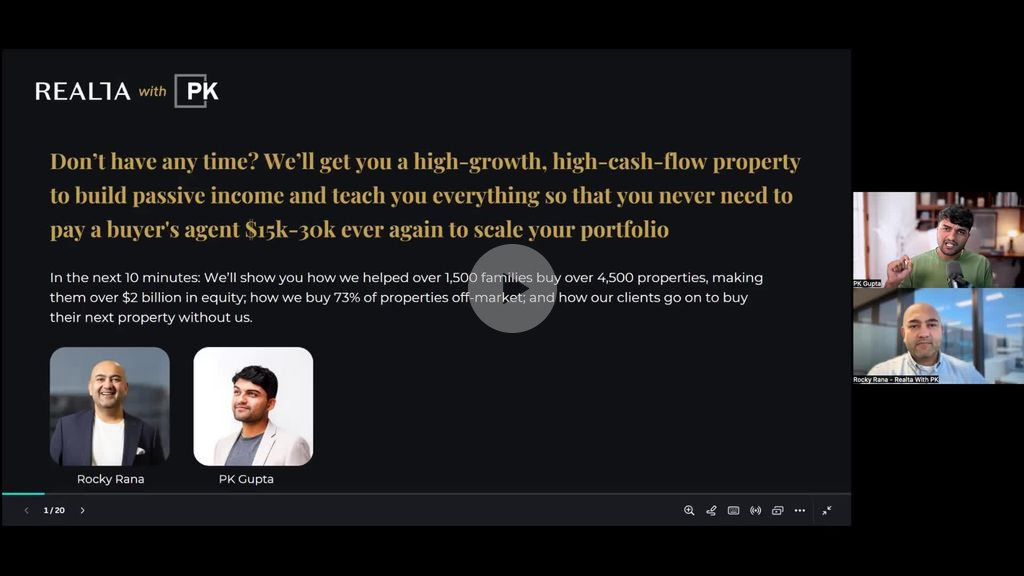
A great building with a shaky tenant is not a great building. This video walks through how we read a lease, assess a tenant covenant, and work out what a commercial property genuinely returns rather than what the advertised yield claims.

How it benefits you

Why the maths works in your favour.

Six things that are simply true of commercial and are not true of the house you already own.

The yield is different

Around 5% to 8% net is common. On a residential you likely see a smaller proportion of that after costs.

You are not re letting constantly

A three to ten year lease means you are not advertising for a new tenant every twelve months.

The rent rises on its own

Most commercial leases build in an annual increase. Your income grows the day you sign, without asking.

Their bill, not yours

Rates, insurance, maintenance and often land tax sit with the tenant on a net lease.

A tenant with something to lose

A business that fitted out your premises and built its customer base there is not leaving casually.

It can sit inside super

And if you run a business, your fund can own the building while your business pays rent to you.

Recently secured

Ordinary buildings. Extraordinary quiet.

Three purchases, three very different assets, all bought for the same reason.
6.5% net · Regional VIC
A brand new childcare centre on a fifteen year lease to a national operator. The rent lifts every single year without me doing a thing.
Daniel

Childcare centre

6.9% net · Brisbane
A warehouse that was never publicly listed, with a tenant who had already been there years. It paid for itself from the first month.
Priya

Industrial warehouse

6.1% net · Melbourne
A medical suite leased to a healthcare group. People need doctors in every market, good or bad. That was the entire point for me.
Andrew

Medical suite

Proof

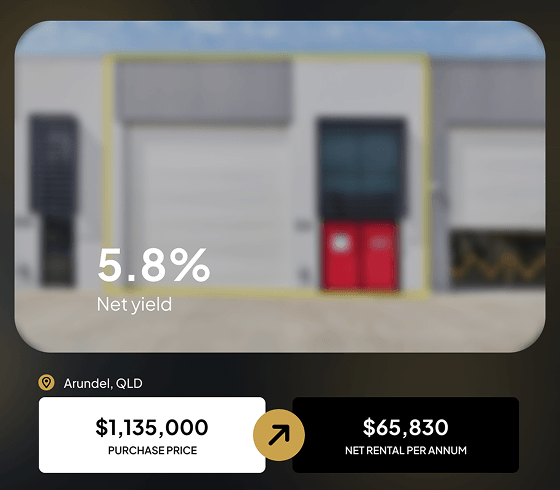
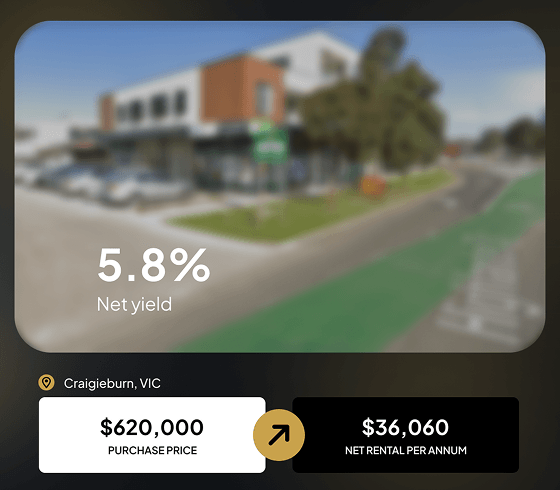
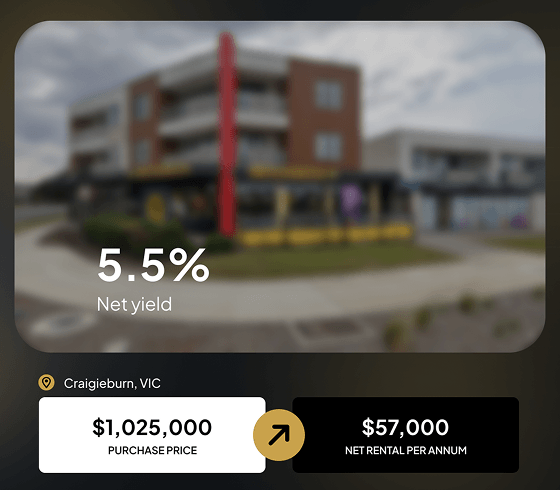
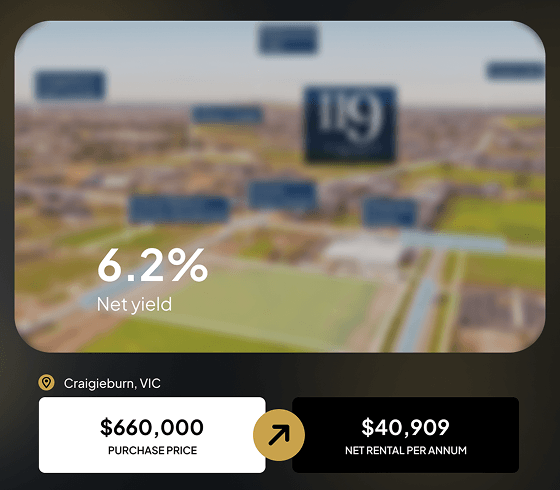
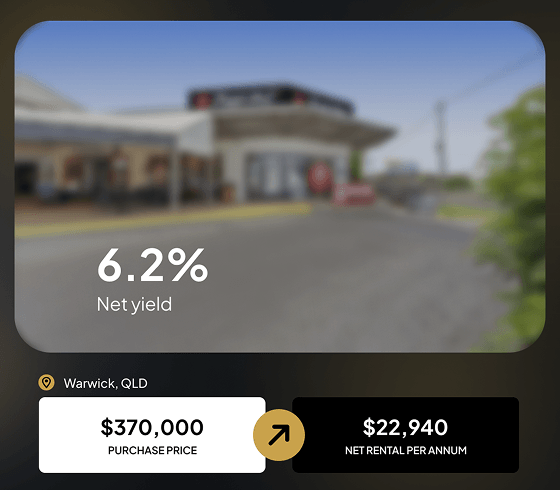
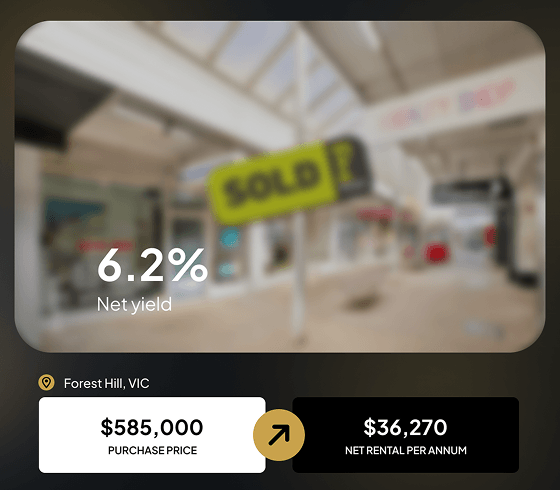
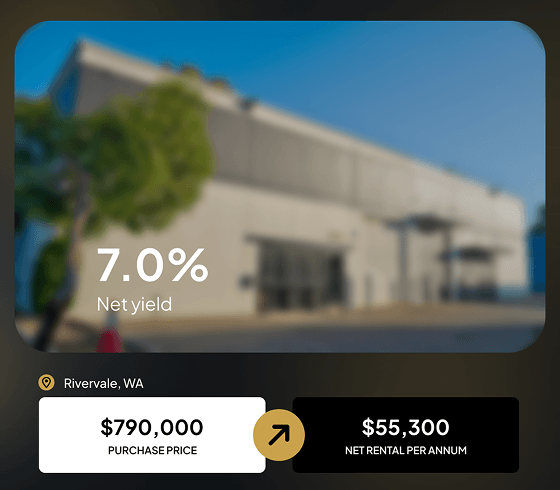
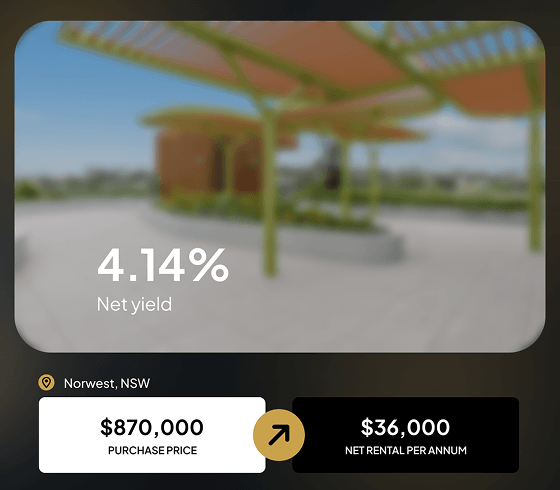
Real deals. Real returns.

Fair questions

What buyers ask us first.

1. What is the minimum budget for commercial property?

The deposit for commercial properties starts from $600,000. Commercial lending usually requires a deposit of roughly 25% to 35% of the purchase price. Spending above the entry point often buys a lower risk asset, with a stronger tenant and a longer lease. We will tell you honestly where in that range your budget fits.

Commercial lending usually wants more than residential, often 25% to 35% of the purchase price. That surprises people. So we put your real numbers on the table during the first conversation rather than later.
We are small and boutique. We are not trying to buy for 30 clients at once. You deal with the owners of the business directly, and your brief gets proper attention. We are also paid only by you, never by a seller or an agent.
Most of our commercial buyers came from residential first. The mechanics differ, but the discipline is the same. We walk you through the lease, the tenant and the numbers before you commit to anything.
Our research team tracks the market continuously and works agent relationships in every state we buy in. Around 73% of what we secure is agreed before it is publicly listed.
6. What return should I actually expect?
Around 5% to 8% net is common on commercial. On residential property, you will likely see a smaller amount after all costs. Every deal is modelled on its own numbers before we recommend it.
On a net lease the tenant pays the rates, the insurance and the upkeep. You receive the rent, and most of the running costs sit with the business, not with you.
On most commercial leases, the tenant does. The exact split is written into the lease, which is why we read every clause before you sign anything.
Most leases build in an annual increase. It may be a fixed percentage, or it may follow CPI. Your income grows on paper the day you sign.
Mainly on the income it produces, not on what the place next door sold for. A stronger lease and a better tenant lift the value directly. That is a lever residential does not give you.
11. What happens if my tenant leaves?
You cover the outgoings until the next tenant signs. That is why we check the tenant, the lease term and the building’s re-letting appeal before you buy. We also plan the buffer with you up front, so a vacancy is an inconvenience rather than a crisis.
We look at how long they have traded, what they have spent fitting out the building, and how the business is performing. A great building with a shaky tenant is not a great building.
It depends on the asset. A well located warehouse or medical suite usually re-lets quickly. A specialised building in a thin market can take months. We factor that into the buying decision, not into a conversation afterwards.
Most leases carry options that let the tenant extend. Where they do not, we start the conversation well before expiry. A tenant who has built their customers in your building rarely moves on a whim.
Vacancy, a tenant whose business weakens, and paying too much for a headline yield. All three are manageable. None of them is a reason to avoid commercial, but you should hear them before you buy, not after.
16. Can I buy commercial through my SMSF?
Yes, and many of our clients do. The fund must meet the usual lending and compliance tests. We will connect you with accountants and advisers who set the structure up properly.
Yes. If you run a business, it can lease the building from your own fund instead of paying a stranger. Your rent then builds your own asset. Your accountant will confirm whether your structure allows it.
Deposits are larger, terms are usually shorter, and the lender weighs the lease as much as your income. We work with brokers who do this every week, so the finance is scoped before we start shortlisting.

The residential negative gearing limits introduced from July 2027 do not apply to commercial real estate. Commercial property retains the full tax advantages and structural agility that residential investors are restricted from utilising. This is general information, not personal tax advice.

Often the sale is treated as a going concern, which can mean no GST is payable. It depends on the contract and on both parties being registered. Your accountant will confirm it for your purchase.
21. What are your fees, and what do I get for them?

Our Commercial Investment Property service is part of PK Private Wealth, and fees start from $20,000 plus GST. The final fee depends on your brief, the type of property and how complex the acquisition is. We confirm the full fee in writing before you commit, so there are no surprises later.

For that fee, we manage the purchase from start to finish. We find a commercial asset that suits your goals and cash flow. We negotiate the price and terms on your behalf and guide you through to settlement.

You are the only party who pays us. We take no commissions, no kickbacks and no referral fees from sellers, developers, agents or project marketers. That is what lets us tell you when a property is wrong.
We use a synthesis of 30 to 35 data factors. Stock on market, days on market, rental growth, building approvals, discounting, developable land supply, job advertisements and mortgage affordability all carry weightings and thresholds. Where demand exceeds supply, prices rise.
Around 73% of what we secure is agreed before it is publicly listed. Our research team tracks the market continuously and works agent relationships in every state we buy in.
Yes. Many clients buy through an SMSF or a trust, and ownership structure matters more since the 2026 tax changes. We will connect you with the right accountants and tax planners. We do not give tax or financial advice ourselves.

What would you do with the extra?

Tell us what you earn now and what you would like to stop doing. We will show you what the numbers would need to look like.

Learn alongside 100,000+ others

Build Property Wealth & Freedom — Even in a Downturn

The property market has changed, but opportunities still exist for investors with the right strategy.

Discover how PK Private Wealth can help you navigate today’s market and build long-term property wealth and freedom.
PK Private Wealth

CAT StrategyTM

Enter your email, get the free strategy video and book a free discovery call.